
Enterprise Cloud Phone System
- Enterprise Cloud Phone System designed specifically for your business
- One of the leading VoIP infrastructures in Ireland
- A proven track record – quality service delivery
- Our engineers are all certified
- Multiple Sites can be connected
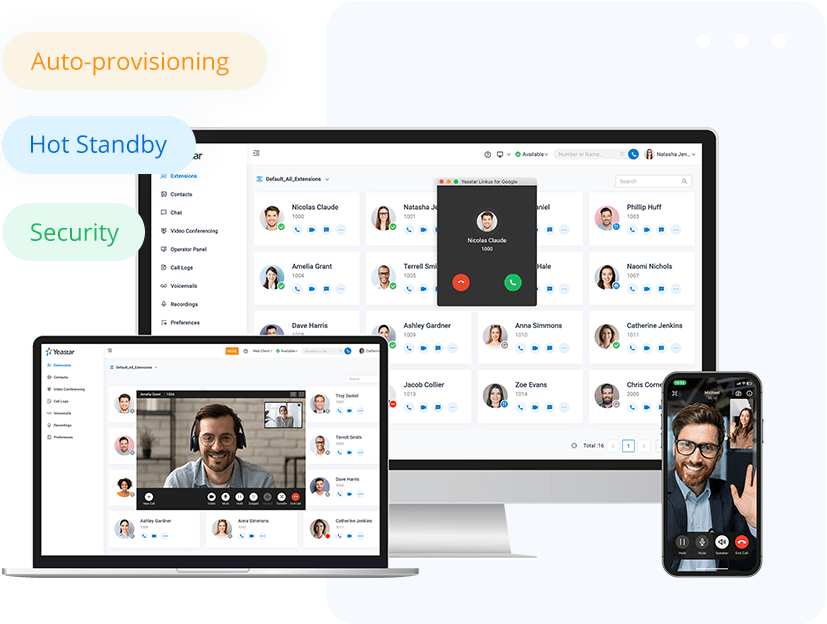
- Staff mobilised to work from anywhere
- Contact Centre with the leading technology

Enterprise Cloud Phone System Features
Quality
VOIP SYSTEMS
CLOUD AND HOSTED PBX
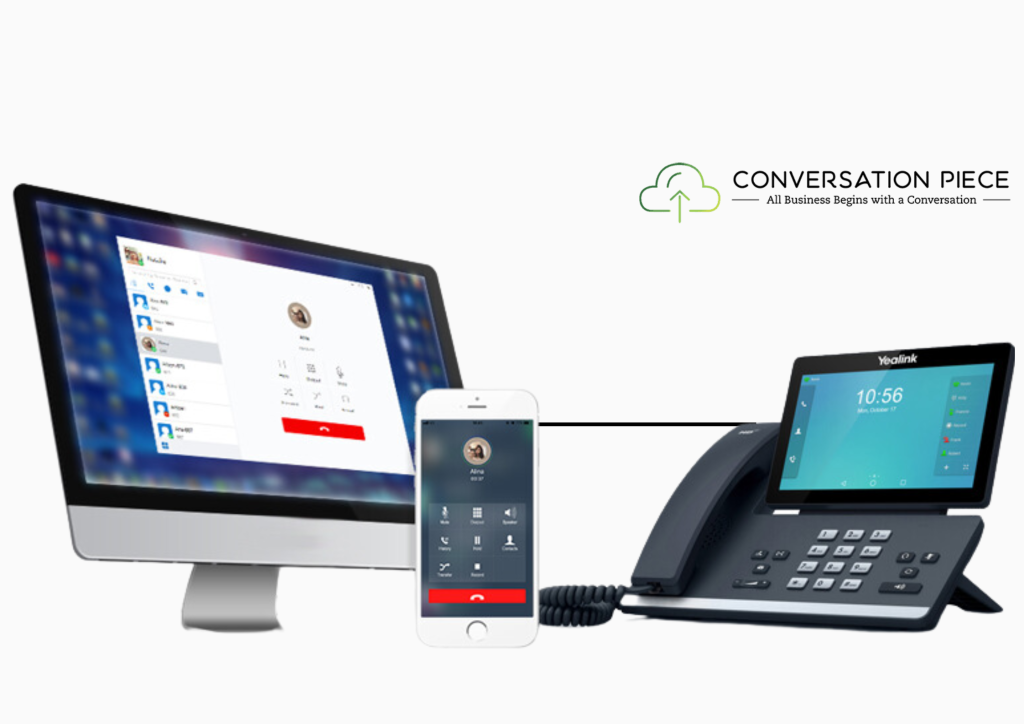
Full Office Integration
Customised & Scalable
National Coverage
Ireland’s leading provider for enterprise cloud phone system
Complete business communication solutions
We meet all your enterprise communications needs in-house. From consulting to creating a system that suits your needs and providing the supporting hardware and software you require. We can design API Integration and integrate with all the Top CRM packages.
Leading VoIP infrastructures in Ireland
A proven track record of top quality
We Know Enterprise Cloud Phone System
Why work with us?
Modernise your business communication system today
Cost benefits of an enterprise cloud phone system
What is our coverage?
Conversation Piece is your Best Choice
Industries we serve

Hospitality Services

Office Systems

Healthcare Organistations
Frequently Asked Questions
VoIP is an acronym that stands for Voice over Internet Protocol. It converts voice into digital signals that are then carried through the internet to the recipient device. The digital nature of the signal means that VoIP calls can be made from any internet-connected computer, a VoIP phone or any other compatible internet-connected device.
VoIP systems differ from analogue telephone systems in two ways. Firstly, with a dependable internet connection, you can get high-quality HD sound quality on your calls. Secondly, since signals are being carried through the internet, it is much cheaper to make calls, especially international calls.
The VoIP framework is what supports all enterprise cloud phone systems.
These terms are usually (erroneously) used interchangeably. While both refer to enterprise cloud phone systems, there are subtle differences in their implementation and functionality.
Under both types of systems, the supporting technology is owned and maintained by your telecoms provider. The main difference between the two is scalability.
Cloud-hosted PBX systems are scalable, in that, your business can expand its capacity in terms of adding (or removing) the number of users supported by the phone system. Therefore, if you initially had four users, but need to hire more, they can easily be included if you have a cloud PBX system.
A Hosted PBX system is not scalable. Here, you pay for a fixed number of users. So, if you pay for a 15 user system, you can’t add or remove from this capacity without getting a new system. If you suddenly need 13 users, you will still be paying for a 15 user capacity system.
In terms of payment, in a cloud PBX system one pays per user, while in a hosted PBX system, a business pays for a fixed capacity.
While it is advisable to have modern equipment that will truly unlock the full potential of an enterprise cloud phone system, it is not mandatory. There are multiple adapters and routers that can be used to migrate your existing ‘analogue’ system to a digital platform.
This allows you to immediately reap the rewards of having a digital system in place without a prohibitive capital outlay. With time, you can modernize your system to better utilize the digital platform.
A SIP trunk is the digital equivalent of the traditional trunk line. In a communications network, a ‘trunk’ is an external communications line that is shared by a network. Think of it like how a single tree trunk supplies all the tree branches with nutrients, water etc.
In an analogue PBS system, actual physical cables were used as trunk lines which were shared by all users in the network. SIP is an acronym standing for Session Initiated Protocol. It is the external connection channel shared by the users of an enterprise cloud phone system.